SURGERY

la-fg-wn-mexico-thyroid-20130724-001


Originally posted at www.latimes.com:

Mexico President Enrique Peña Nieto to undergo thyroid surgery

By Richard Fausset
July 24, 2013, 6:15 p.m.

MEXICO CITY — Mexican President Enrique Peña Nieto is planning to undergo thyroid surgery next week, his office announced Wednesday evening.

Doctors at Mexico City’s Central Military Hospital plan to remove a thyroid nodule during the July 31 operation, after which Peña Nieto will have a four-day recovery period at Los Pinos, the MexicanWhite House.

The thyroid gland is in the neck, below the voice box. Among other things, it helps regulate metabolism.

According to the American Thyroid Assn. website, thyroid nodule removal surgery may be necessary for a number of reasons. A biopsy may have determined that the nodule is cancerous, or possibly cancerous. Surgery may also be necessary if a biopsy was inconclusive. Nodules known to be non-cancerous may need to be removed if they are large, or causing pain.

The statement from the president’s office did not say which of these might be the case for Peña Nieto, and a spokesman declined to comment.

Peña Nieto, of Mexico’s Institutional Revolutionary Party, or PRI, was elected in July 2012 and took office in December. He is pressing for a series of proposed institutional reforms that he says are designed to make Mexican government more modern and efficient.

this month, he finished a Mexico City 10K road race (6.2 miles) in a respectable 54 minutes, 8 seconds.

Copyright © 2013, Los Angeles Times

Photo: A handout photograph made available by Mexican Presidency on 13 July 2013 shows President of Mexico, Enrique Pena Nieto (C), as he runs at 3rd ‘Molino del Rey’ 10k-race in Chapultepec Park, Mexico City, Mexico. (European Pressphoto Agency / July 24, 2013, via LA Times)

AMBUSHED

Shootouts with Mexican police in Michoacan state leave 22 dead

By Richard Fausset
July 24, 2013, 8:17 a.m.

MEXICO CITY — Organized criminals in the troubled Mexican state of Michoacan were suspected of unleashing a series of attacks on government forces Tuesday that resulted in the deaths of 20 criminals and two federal police officers, according to the federal government.

The brazen attacks, which also left 15 police officers injured, underscored the challenge the Mexican government faces in a southwestern state that, while long plagued by outlaw groups, has suffered from intense new waves of cartel violence. The conflict is detracting from President Enrique Peña Nieto’s effort to steer the world’s attention away from Mexico’s drug war and toward the country’s economic potential.

The instability in Michoacan ratcheted up in recent months as armed “self-defense” groups rose up to fight off the state’s dominant cartel, the Knights Templar, who, in addition to their drug operations, have engaged in a widespread campaign of extortion, rape and killings of everyday citizens.

Peña Nieto, who took office in December, sent thousands of federal troops to Michoacan in May in an effort to quell the violence, his first major military offensive against the drug gangs.

A statement late Tuesday from the Mexican Interior Ministry said that federal police units in various parts of the state were subjected to six “pre-planned” attacks carried out by “individuals with large arms hidden in the hills.”

The attackers also set up a number of roadblocks, using buses and other vehicles.

“In all of the cases, authorities repelled the aggressions to return order to the areas,” the statement said, adding that federal police and military units were searching for the shooters.

The attacks came a day after another bloody incident in the city of Los Reyes, in the western portion of the state. A group of citizens, among them members of a self-defense group, marched on city hall, apparently to protest the influence of the Knights Templar. A group of gunmen opened fire on the group, killing five people and injuring seven, according to the state government.

On Thursday, three other federal police were slain and six wounded in an ambush near the border with the state of Guerrero. On Friday, the bullet-riddled bodies of two men and two women were found hanging at the entrance to the city of El Limon de La Luna, in the agricultural municipality of Buenavista Tomatlan, home to some of the worst fighting between citizens and the Knights Templar.

In some cases, the federal authorities have been working alongside the armed vigilante groups, even co-staffing security checkpoints. But there is also some concern that the self-defense groups have been infiltrated by a rival cartel. Before the arrival of the military, confrontations between the self-defense groups and the Templars resulted in dozens of deaths.

Earlier in the day Tuesday, Interior Secretary Miguel Angel Osorio Chong told reporters that the government would seek out those responsible for the “cowardly” attack against the Los Reyes protesters and would continue the work of “reestablishing order, peace and security.”

“We will not let them violate the security, the property and the lives of the citizens,” Osorio Chong said during a news conference in the border city of Matamoros, where he had met with U.S. Homeland Security Secretary Janet Napolitano to discuss border security issues.

Copyright © 2013, Los Angeles Times


BLOODY DAYS

INAUGURATION OF FRENCH-MEXICAN ESTRATEGICAL COUNCIL


Originally posted at www.latimes.com:


In Mexico, dozens fall to new violence across 4 troubled states

By Cecilia Sanchez and Richard Fausset
July 22, 2013, 6:28 p.m.

MEXICO CITY — Despite some recent promising homicide statistics, violence continues to rage in regions of Mexico plagued by drug gangs and organized crime, as evidenced by dozens of killings spread over four states in the last five days.

The incidents, which include a deadly ambush on federal police and the slaying of two people in a medical clinic by gunmen disguised as doctors,  demonstrate how much work President Enrique Peña Nieto has yet to do to convince his countrymen that Mexico is becoming safer.

In June, six months after Peña Nieto’s swearing-in, his government boasted that in both February and May the number of homicides connected to federal crimes fell below 1,000 per month. (Drug and organized crime cases are usually under federal jurisdiction in Mexico.)

Statistics for June showed that the symbolically important 1,000 figure again had not been breached, with 869 homicides reported by the Interior Ministry. Before February, it had been surpassed every month for three straight years.

But the seemingly unrelated acts of violence in recent days is a rebuke to anyone who thinks the country’s problems are solved.

The ambush of the federal officers occurred Thursday in the southwestern state of Michoacan, on a highway near the border with the state of Guerrero. Three officers were slain and six were wounded, according to the state prosecutor’s office.

A day later, the bodies of two men and two women were found hanging at the entrance to the Michoacan community of El Limon de la Luna, in a municipality called Buenavista Tomatlan. The farming region, in the western portion of Michoacan known as the Tierra Caliente (Hot Land), has beenone of the most unstable in Mexico in recent months, with vigilante groups taking up arms to defend themselves from a narcotics cartel called the Knights Templar. Peña Nieto sent the military to the region in May in an effort to restore order.

There is a concern that some of the vigilante groups have been infiltrated by members of a rival drug cartel. On Monday, according to media and government reports, a group of protesters in the western Michoacan city of Los Reyes marched on city hall, reportedly accompanied by members of a self-defense group who planned to kick out the municipal police, whom they suspected of supporting the Knights Templar.

The news agency Notimex reported that the protesters were fired on by members of a second group whose identity is unknown. Mexican papers Monday reported that as many as five people were killed in the attack. The state’s governor confirmed Monday via Twitter that one woman had been killed.

In the neighboring state of Jalisco, officials said seven people were slain in a 12-hour period Saturday in greater Guadalajara, Mexico’s second-largest metropolitan area and the longtime home of a number of narco bosses. Among the victims, officials said, were a state police officer and a municipal police officer from Puerto Vallarta.

In the state of Durango, to Jalisco’s north, eight people were slain Friday in three municipalities. The next day, three burned bodies were discovered in a home in the city of Lerdo.

In the border state of Coahuila, 18 people were slain in various incidents in the capital, Saltillo, between Friday and Sunday. Gunmen who dressed as doctors carried out an attack in a medical clinic in Torreon, state officials said.

Last week, the leader of the notorious Zetas drug cartel, Angel Treviño Morales, was captured by federal officials, and many had speculated that a wave of bloodshed would follow. But it is not clear if any of the recent events are connected to his detention.

In addition to army and navy troops who have been fighting the drug cartels since 2006, the federal government next year plans to introduce 4,000 to 5,000 members of a new gendarmerie, a special police force with military training that Peña Nieto promised during his campaign.

“We are defining their functions, where they are going to be and what they are going to do,” said Manuel Mondragon y Kalb, the national security commissioner, in a television interview this month.

Copyright © 2013, Los Angeles Times

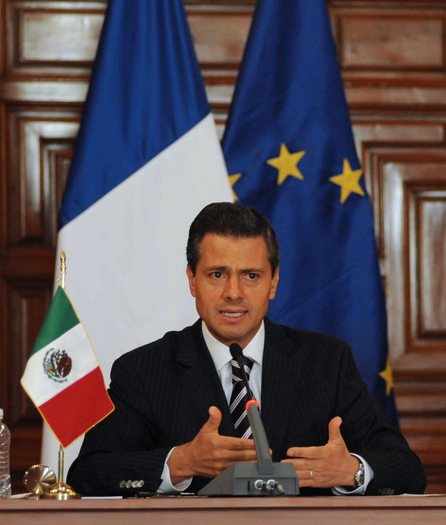
Photo: Mexican President Enrique Peña Nieto (Mexican President’s Office, via LA Times)

DAFT KITSCH

daft kitsch


…a la Mexicana. T-shirt shop, Guanajuato, GTO. [RF]

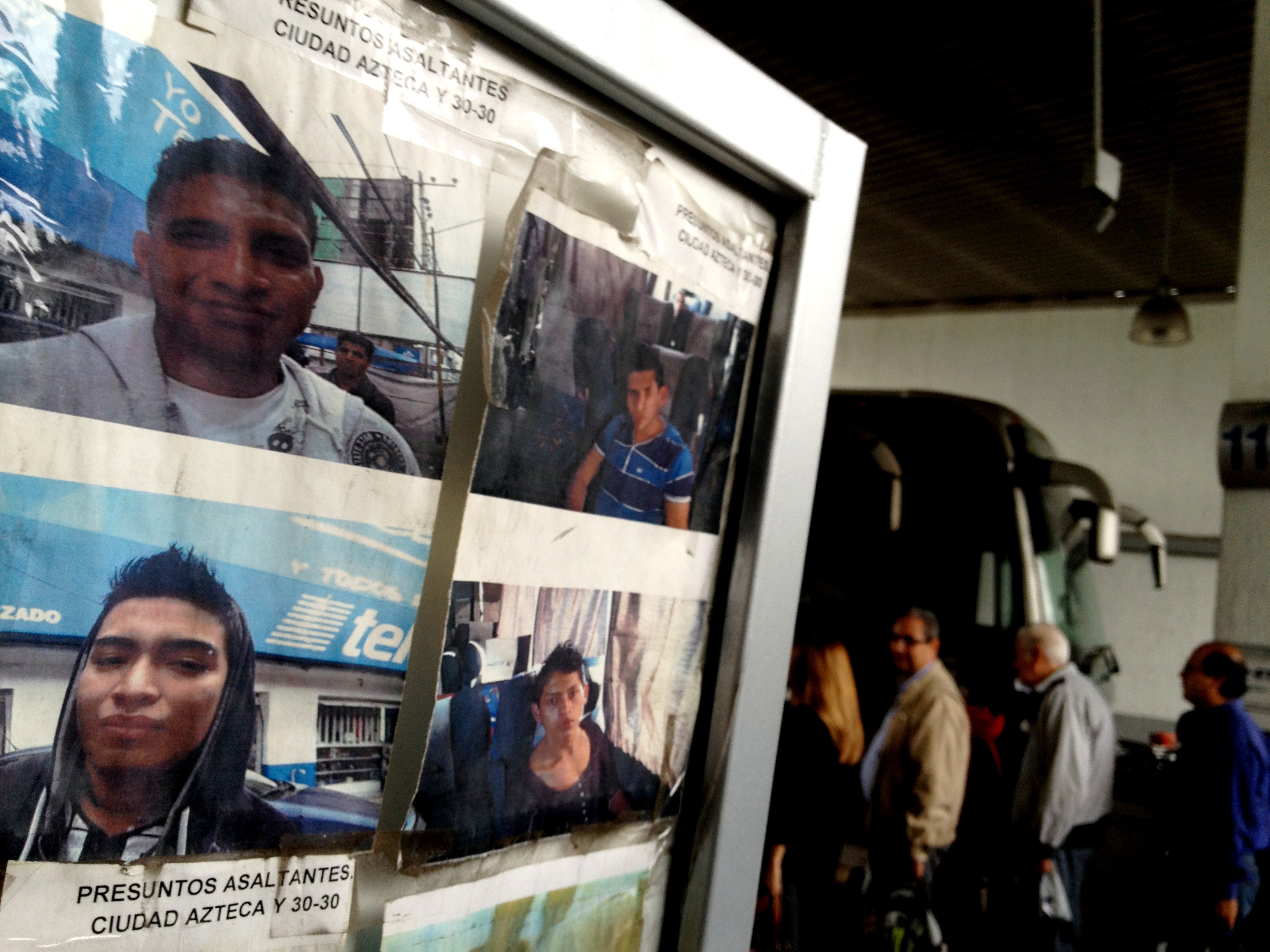
PRESUNTOS ASALTANTES

ASALTANTES LEAD

Before boarding at Mexico City’s northern bus terminal, a message board warns passengers of the “presuntos asaltantes” (“alleged assailants”) they may encounter on their journey. [RF]

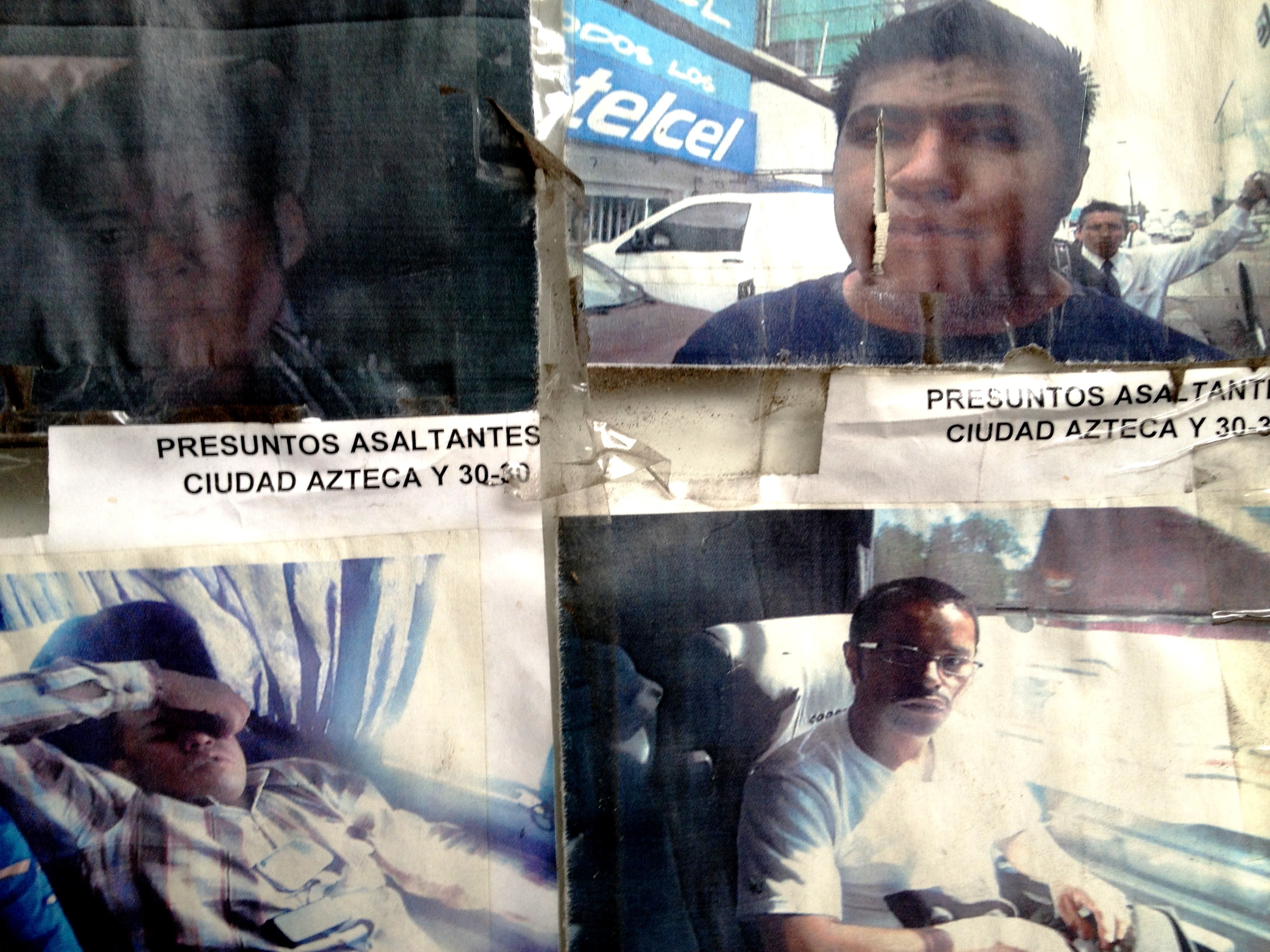
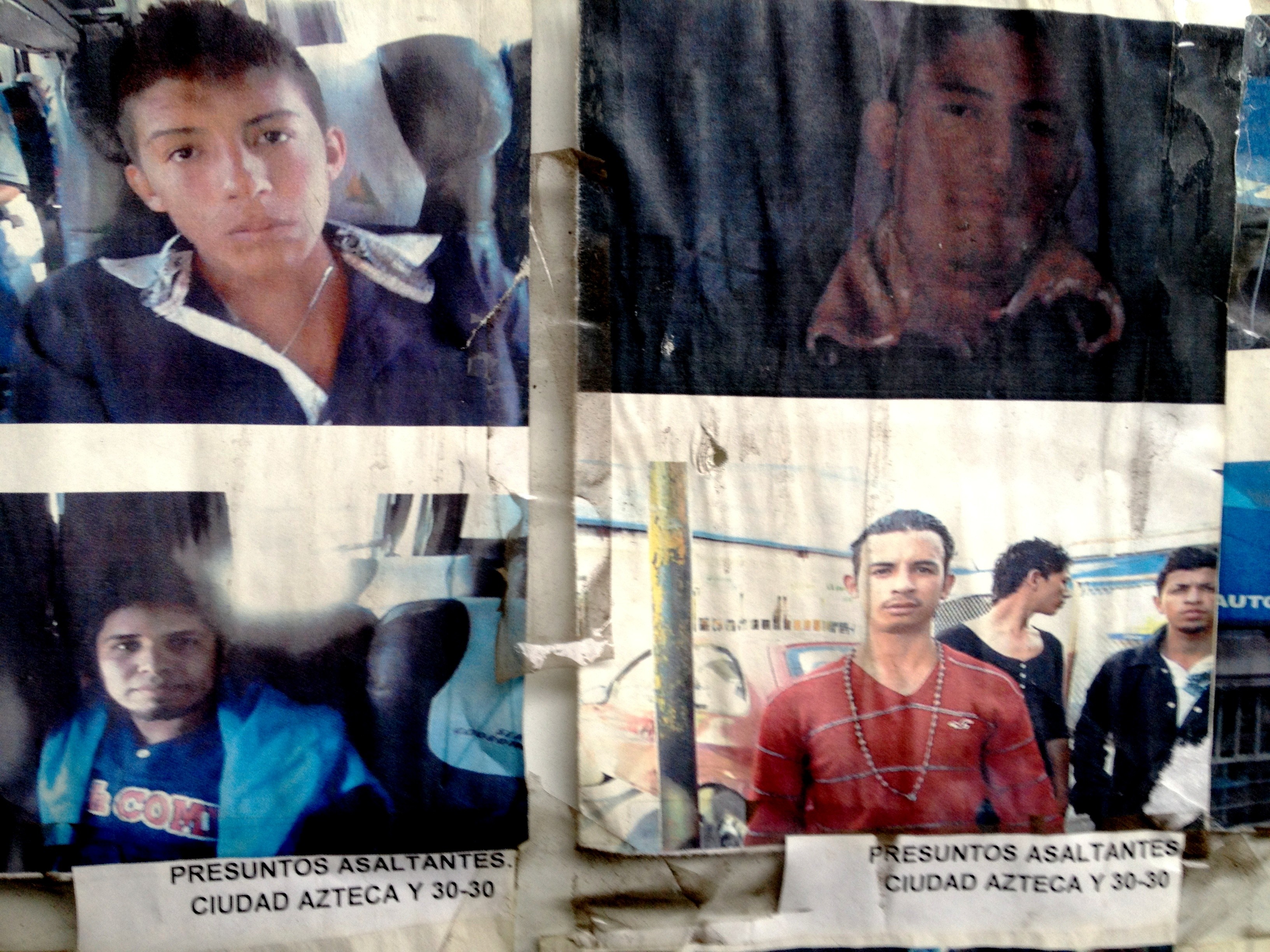
A few more faces:

ASALTANTES 1ASALTANTES 2

#4

MEXICO-PRESS-CRIME


Originally posted at www.latimes.com:

Journalist found slain in Mexican state of Oaxaca

By Richard Fausset and Cecilia Sanchez
July 17, 2013, 6:06 p.m.

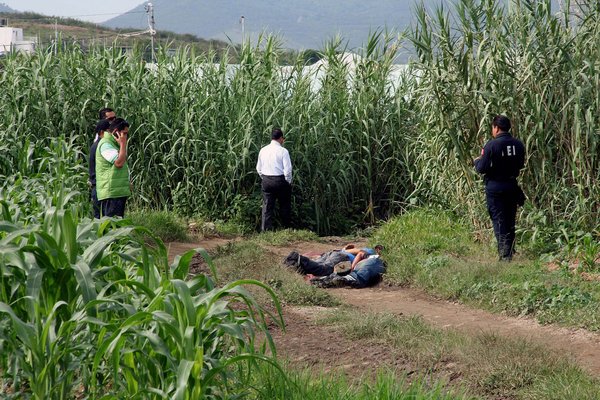
MEXICO CITY — A journalist who covered the police beat in the Mexican state of Oaxaca was found dead Wednesday, reportedly with gunshot wounds.

It was unclear whether Alberto Lopez Bello was attacked in retaliation for his work for El Imparcial, a newspaper in the city of Oaxaca, the state capital. The paper published a brief statement Wednesday demanding a thorough investigation and saying the killing “demonstrates the vulnerability to which communicators are exposed in their daily work of providing truthful and timely information to the citizenry.” [link in Spanish]

The Oaxacan state government said that Lopez’s body was found along with the corpse of another man in Trinidad de Viguera, a city north of the Oaxacan capital. The news website Milenio reportedthat Lopez suffered gunshot wounds. [link in Spanish]

The second man was identified by state officials as Arturo Alejandro Franco Rojas. Milenio reported that Franco worked for a municipal police intelligence unit.

Mexico remains one of the most dangerous places in the world for journalists.

Lopez was the fourth journalist slain during the seven months that President Enrique Peña Nieto has been in office. According to the Committee to Protect Journalists, 53 journalists were killed or vanished during the six-year term of former President Felipe Calderon, Peña Nieto’s predecessor.

Oaxacan Gov.  Gabino Cue instructed the state prosecutor’s office to refer the case to the federal attorney general. In May, Mexico passed a law giving federal prosecutors more authority to take up cases involving crimes against journalists.

Sanchez is a researcher in The Times’ Mexico City bureau.

Copyright © 2013, Los Angeles Times

Photo: Authorities stand near the body of journalist Alberto Lopez Bello and another man in a cornfield north of Oaxaca, Mexico. ( AFP/Getty Images / July 17, 2013, via LA Times.)

REPAIR JOB

North Korean ship detained


Originally posted at http://www.latimes.com:


Missile parts found on North Korean ship are claimed by Cuba

Cuba says the ship detained by Panama carried ‘obsolete defensive armaments’ going to North Korea for repair.

By Richard Fausset
July 16, 2013, 10:04 p.m.

MEXICO CITY— Cuba announced Tuesday that the missile parts the Panamanian government found hidden in a North Korean cargo ship heading home were part of a stash of aging military equipment in need of repair.

Cuba’s Exterior Relations Ministry said the North Korean ship contained 240 metric tons, or about 529,000 pounds, of “obsolete defensive armaments” that were being sent to North Korea to be repaired and returned to Cuba; it said it also carried about 10,000 tons of sugar.

Among the armaments, the ministry statement said, were two antiaircraft missile systems, nine missiles “in parts and pieces,” two MIG-21s and 15 engines for such planes.

“The agreements signed by Cuba in this area are based on the need to maintain our defense capability to protect national sovereignty,” the statement said. “The Republic of Cuba reiterates its firm and irrevocable commitment to peace, disarmament, including nuclear disarmament, and respect for international law.”

It was unclear Tuesday night whether the shipment of the war materiel constitutes a violation of the United NationsSecurity Council resolutions that have targeted North Korea for continuing to develop its nuclear weapons program. Resolution 1718, passed in 2006, prohibits, among other things, the solicitation of “services or assistance” from North Korea for a range of military items, including missile systems and combat aircraft.

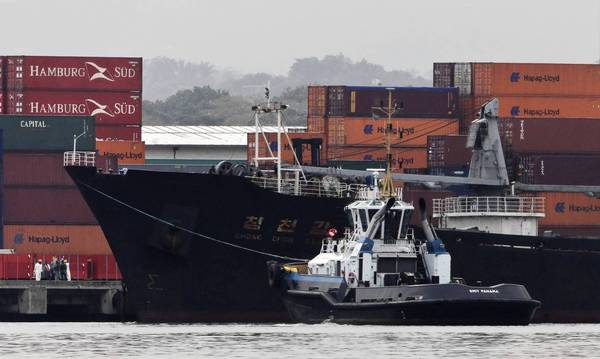
Cuba’s announcement came less than 24 hours afterPanamanian President Ricardo Martinelli said that parts of a missile system had been discovered hidden on the North Korean vessel. The discovery was made five days after the ship, the Chong Chon Gang, was detained at Colon, on Panama’s Caribbean coast, before it could pass through the Panama Canal and return to North Korea. Panamanian officials originally suspected the vessel was smuggling drugs.

Martinelli said the weapons were undeclared. He and other officials said the North Korean crew was uncooperative with Panamanian investigators and that the ship’s captain attempted to commit suicide.

Whether international law was, in fact, respected, probably will be a matter for the United Nations. Before the Cubans declared ownership of the discovered items, State Department spokesman Patrick Ventrell said that a report probably would be sent to the U.N.’s sanctions committee.

“If indeed there were a shipment of arms on board this vessel, any shipment of arms or related material would violate U.N. Security Resolutions 1718, 1874 and 2094,” he said, referring to the resolutions targeting the North Korean government.

Rep. Debbie Wasserman Schultz (D-Fla.), in a statement, called the incident “yet another example of why we need to treat Cuba as the international pariah that it is.”

The discovery may also end up illustrating the desperation of a defiant communist government in Pyongyang that is increasingly isolated on the world stage, and hoping to at least bolster its relationship with ideological soul mates in Cuba. The two nations have shared diplomatic relations since 1960.

In late June, a North Korean military delegation headed by Gen. Kim Kyok Sik visited top Cuban military officials in Havana. The visit came four months after the U.N. Security Council responded to a North Korean nuclear test by tightening sanctions, which also prohibit the import or export of conventional weapons and items that could be used by North Korea to develop nuclear weapons.

The visit also came as Myanmar, also known as Burma, an important North Korean ally, appears to be giving its old friend the cold shoulder. In November 2012, Myanmar’s government agreed to abide by a U.N. resolution prohibiting the procurement of military goods and assistance from North Korea.

“They’ve got a very short list of allies with whom they can trade militarily,” said Hugh Griffiths of the Stockholm International Peace Research Institute.

Griffiths said the ship probably got the attention of U.S. intelligence upon its arrival in a part of the Western Hemisphere that it rarely visits. In 2010, officials in Ukraine found drugs and small-arms ammunition aboard the ship, he said.

Ventrell said that the Chong Chon Gang had a “public record of narcotics smuggling.”

Steve Atkiss of Command Consulting Group, a Washington-based company that advises the Panamanian government, said crew members dropped anchor to prevent being taken to shore and broke the onboard crane that could have helped unload the massive supply of Cuban sugar.

Panamanian officials, who before the Cuban announcement thought more contraband might be aboard, said it would take days to unload all of the sugar and conduct a thorough search.

South Korea’s Yonhap news agency quoted an unnamed Foreign Ministry official as saying, “We need to verify the facts first, but if [the seized items] are found to be materials for missiles, we can take actions as they violate the U.N. resolutions.”

richard.fausset@latimes.com

Times staff writers Ken Dilanian in Washington and Julie Makinen in Beijing and Cecilia Sanchez of the Times’ Mexico City bureau contributed to this report.

ALSO:

Captured Zeta cartel lord Treviño infamous for brutality

Snowden digging himself in deeper with new threats, revelations

Neo-Nazi metal musician planned ‘large’ terror attack, officials say

Copyright © 2013, Los Angeles Times

Photo: The North Korean-flagged cargo ship Chong Chon Gang, center, sits docked at Colon, Panama. (Arnulfo Franco, Associated Press / July 16, 2013, via LA Times) 

BIG SHOES

lazaro cardenas


Two women hanging out in Mexico City beneath a giant statue of Lazaro Cardenas, the Mexican president revered for nationalizing the oil industry in the 1930s. This photo was taken moments after a rally in the Mexican capital in late June that drew hundreds of residents opposed to President Enrique Peña Nieto’s proposal to open the Mexican national oil company, Pemex, to foreign investment. [RF]


MASCARAS MALLAS BOTAS

mascaras


If you want to become an instant man of mystery, feared and/or adored by the masses, head to a storefront like this one, in Mexico City’s Doctores neighborhood, where they’ll outfit you with “mascaras mallas botas” (masks tights boots).

Photo: [RF]

FENCES

U.S. border 'surge' proposal angers Mexicans

Originally posted at www.latimes.com:

In Mexico, U.S. border ‘surge’ proposal stirs outcry

Critics see the U.S. border ‘surge’ plan as an affront to Mexico. Some also take aim at President Enrique Peña Nieto for not speaking out more forcefully.

By Richard Fausset, Los Angeles Times
June 25, 2013, 5:14 p.m.

MEXICO CITY — The U.S. Senate‘s proposal to spend $46 billion to help secure the country’s southern border may or may not persuade skeptical colleagues in the House to support broader immigration reform. But the proposal is generating some serious grumbling in Mexico.

“We are ‘friends and neighbors,’ as is repeated ad nauseam,” Fernando Belaunzaran, a congressman with Mexico’s left-wing Democratic Revolution Party, tweeted this week, “but the U.S. is about to militarize the border with Mexico as if we were at war.”

“Neighbors don’t do this to each other,” Univision news anchor Jorge Ramos wrote in the newspaper Reforma.

On a national radio show, Lorenzo Meyer, a respected columnist and academic, suggested that Mexico retaliate by kicking out CIA and Defense Department officials who are collaborating with the government in the fight against drug cartels. Or perhaps, Meyer mused, Mexico could get back at the U.S. by refusing to accept any more American retirees.

The proposed spending spree at the border — which supporters have labeled a “surge,” after the 2007 U.S. troop increase in Iraq — was included as an amendment to a broader immigration bill that appears almost certain to pass in the Senate this week. The additional spending would add nearly 20,000 Border Patrol officers, roughly doubling the current force. It would also fund the completion of 700 miles of border fencing and 24-hour surveillance flights by drones.

The Senate voted 67 to 27 on Monday to end debate on the amendment. Supporters are hoping that a lopsided approval of the immigration reform bill in the Senate will build momentum for the proposal as it heads to the House of Representatives.

In the lower chamber, some conservative lawmakers do not want to support the bill’s provision of a “path to citizenship” for unauthorized immigrants, particularly because they fear it will encourage more people to sneak in. But supporters of the surge are hoping to convince skeptical House members that slipping across the border will become far more difficult.

The plan’s American critics include immigrant rights advocates, budget hawks and civil libertarians wary of the expanded surveillance capabilities the Border Patrol would be granted. In Mexico, most of the complaints have come from the left, whose leaders have reiterated the long-held opinion here that U.S. border policy, with its walls, fences and armed border agents, is an insult to their nation.

A number of critics also have taken aim at the government of President Enrique Peña Nieto for not speaking out more forcefully.

“The passivity and negligence of his government is incomprehensible; it’s as if this had nothing to do with him, as if this was not going to seriously affect millions of Mexicans,” Ramos, the TV anchor, wrote in his column Sunday.

Peña Nieto’s team has chosen to hang back from the immigration debate north of the border, apparently out of fear that any cheerleading for the cause could be construed by American conservatives as unwarranted meddling. Former Mexican President Vicente Fox’s efforts to persuade Americans to accept immigration reform in 2001 led to a substantial backlash.

Fox’s former foreign secretary, Jorge Castañeda, who helped lobby for a change in immigration law in 2001, said the Mexican government needed to speak out about the plan.

“Mexico can’t say nothing in the face of a reform that includes doubling the number of Border Patrol agents,” he said in a radio interview Monday. “It strikes me as shameful.”

On Tuesday, Foreign Secretary Jose Antonio Meade delivered a measured statement in which he reiterated the government’s contention that U.S. immigration reform would help millions of Mexican migrants.

But fences, Meade said, “are not the solution to the phenomenon of migration, and aren’t consistent with a modern and secure border. They don’t contribute to the development of the competitive region that both countries seek to promote.”

The apprehension of Mexicans at the U.S. border has been trending dramatically downward since fiscal 2000, when 1.6 million Mexicans were detained. In fiscal 2012, the number was 262,000. It’s likely that fewer Mexicans have been trying to cross in light of the sputtering U.S. economy, stricter border control and fear of Mexican criminals who prey on migrants.

U.S. government statistics show that the number of non-Mexicans apprehended at the border, most of whom were Central Americans, also declined from fiscal 2005 to 2011. But the number doubled from 2011 to 2012, to 94,000, probably a result of rising violence and instability in several Central American countries.

Maria Garcia, the president of the Mexico City-based Aztlan Binational Migrants Movement, said that increased border enforcement would force migrants to find even more dangerous and remote places to cross the border, putting their lives at greater risk. She also doubted that a more heavily fortified border would do much to scare off migrants seeking better wages.

“Hunger is too strong,” she said. “They’ll keep risking their lives.”

But Alfredo Rodriguez, a 59-year-old hardware store clerk, said he could live with the border plan if the U.S. gave Mexicans more legal avenues for employment, such as temporary work visas. In any case, he said, the Americans were within their rights to beef up their security.

“If you invade someone’s property,” he said, “obviously, there are going to be consequences.”

richard.fausset@latimes.com

Copyright © 2013, Los Angeles Times

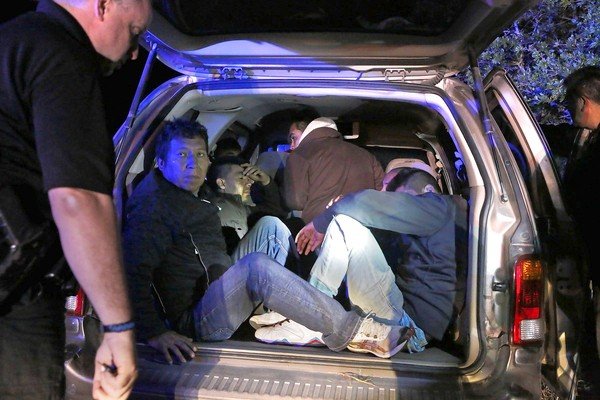
Photo: Brooks County sheriff’s deputies stop a vehicle carrying Mexicans suspected of crossing illegally in Falfurrias, Texas. A Senate proposal to tighten border security calls for doubling Border Patrol officers, 700 miles of border fencing and drone surveillance flights. (Don Bartletti / Los Angeles Times / April 10, 2013)