mexico

ON THE ROAD

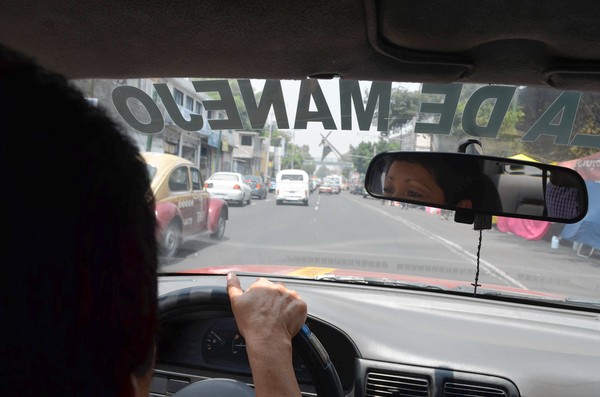
This is a video I shot in an effort to capture the insanity of Mexico City traffic. The idea was to post the video alongside my article on the topic the other day. I had a feeling it was going to be difficult to capture just how wild and frightening it is to drive here: unless you are a witness to an accident, it’s really difficult to convey the madness with a video camera.

The piece turned out sort of tranquil and woozy–not matching the theme or tenor of the article, but perhaps interesting in its own way. We 86ed it as an official LA Times product. But here it is as samizdat–a snippet of a codeine dream of the Mexico City streets.

HAVEN?

Deadly shooting in Mexico City's Tepito neighborhood


Originally posted at www.latimes.com:

MEXICO UNDER SIEGE

Mexico City mayor under fire over disappearances of 12

Miguel Angel Mancera mishandled the case of the missing bar patrons, critics say. The incident and others have sparked debate about crime in Mexico’s capital.

By Richard Fausset, Los Angeles Times
June 19, 2013, 4:30 p.m.

MEXICO CITY — Miguel Angel Mancera, the former top prosecutor in Mexico’s capital, rode his crime-fighting reputation to the mayor’s office, promising voters a superior level of safety as the cornerstone of a revitalized metropolis.

But six months into his term, Mancera, is fighting accusations that he has mishandled the highest-profile case of his mayoral career: the disappearances last month of 12 people from a bar in the heart of Mexico City.

The case remains unsolved, and the criticism of Mancera, a potential presidential candidate for the left-wing Democratic Revolution Party, or PRD, has been withering.

Mancera suffers from “political autism,” wrote a columnist on the website Sin Embargo. The mayor has not proved to be “a distinct or distinguished head of government,” declared a writer for Proceso newsmagazine.

Perhaps even worse for Mancera is that the disappearances, along with other recent acts of violence, have sparked a national debate about whether Mexico City is lapsing into a period of destabilizing drug-gang violence after several years as an oasis of calm compared with other Mexican cities.

Many think the answer is no. But then again, nobody knows for sure.

“I would like to believe, as an inhabitant of this city, that it is not, but I cannot rule it out,” said Juan Francisco Torres Landa, secretary of the civic group Mexico United Against Crime.

The capital’s reputation as a haven from cartel violence in recent years has made it a magnet for Mexicans whose cities have been beset by shootouts, beheadings and streets blockaded by burning cars. But horrors loom nearby, particularly in the neighboring states of Morelos, the province of the Beltran Leyva cartel, and Mexico, which is dominated by the cartel known as La Familia.

Mexico City is by no means perfect. The U.S. State Department says armed robberies, street crime and kidnappings are “daily concerns.” The 2011 homicide rate of 8.8 per 100,000 residents in the federal district, which encompasses the capital, was roughly one-tenth the rate for the northern state of Chihuahua.

Occasionally, there are outbursts of spectacular public violence of the kind considered a cartel-war hallmark. Last June, federal police said to be protecting a drug smuggling operation killed three fellow officers in the middle of the bustling Mexico City airport.

As a mayoral candidate, Mancera took some credit for the plummeting city crime rate during his time as top prosecutor, including a 12.5% reduction from 2010 to 2011, under the administration of Mayor Marcelo Ebrard. Mancera won the election handily and took office in December.

But even if Mancera can boast that he helped reduce the high levels of crime that once beset Mexico City, it would be difficult for him to ensure a safe environment if organized crime groups have in fact decided to launch a period of terror.

The mayor last week pressured his team to solve the case of the 12 disappearances, telling reporters that “no one is guaranteed a place in my government if they don’t get results.” On Tuesday, the city prosecutor’s office announced that the head of the missing persons bureau, Francisco Carlos Trujillo Fuentes, had stepped down and was being replaced.

Numerous theories exist as to why safety improved in this city of 20 million people during Ebrard’s tenure.

Supporters say the Ebrard team was wise to install thousands of video cameras, hire sharp, innovative police leaders and develop social programs to give kids alternatives to crime. Others suspect that the drug cartel bosses have designated Mexico City as a “safe zone” for their families, which has prevented it from becoming an urban battleground the way cities such as Ciudad Juarez, Monterrey and Guadalajara have in recent years.

Jorge Chabat, a professor at the city’s Center for Economic Research and Teaching, said cartel bosses may have been operating under the assumption that major crimes would generate much more attention in the media-saturated capital than elsewhere and result in more heat from authorities.

A report from the Mexico City Citizen Council shows some homicide and gun-related statistics up slightly in the first five months of this year compared with the same period last year. But auto thefts and home-invasion robberies have declined.

Torres said the May 26 disappearances of the 12 young men and women, whose ages ranged from 16 to 34, garnered more media attention than other similar crimes because they occurred in the Zona Rosa, or Pink Zone — a centrally located, formerly trendy neighborhood that has fallen on hard times but is nonetheless well known to the Mexican elite.

In tougher, working-class neighborhoods, Torres said, “they’d probably say, ‘Why are you guys so concerned about this? This is what happens every day in this city.'”

The details of the disappearances are murky. Family members said the bar patrons had been stuffed into SUVs by armed, masked men, a hallmark of mass kidnappings in other Mexican cities. But city prosecutor Rodolfo Rios has shared surveillance tapes that show the bar patrons being loaded into a number of compact cars by men who do not appear armed or masked. Rios said authorities could place only eight of the 12 missing people at the bar.

Rios said the disappearances may have involved a rivalry between local drug gangs. The missing all hail from Tepito, a neighborhood notorious for counterfeiting and other criminal operations.

Prosecutors have acknowledged that one of the missing, 16-year-old Jerzy Ortiz Ponce, is the son of Jorge “The Tank” Ortiz Reyes, the incarcerated leader of a Tepito neighborhood drug gang. Another of the missing, Said Sanchez, is the son of Alejandro “El Papis” Sanchez, who is serving time for homicide, robbery and extortion, according to local news reports.

On June 6, two masked gunmen entered a gym in Tepito and killed four men. Authorities do not believe the attack is related to the disappearances. More recently, a Mexican journalist revealed that five other missing people were last seen at another bar in a different part of town.

In a separate incident in early May, the grandson of the late Malcolm X, Malcolm Shabazz, was killed in a fight at another Mexico City bar and two suspects were arrested.

Mancera’s government, which has sent hundreds of additional police officers to Tepito and the Zona Rosa, has vowed to watch over nightclubs to prevent further disappearances.

The mayor has denied that the Zona Rosa disappearances had anything to do with the drug cartels and that cartels are operating in the capital.

Torres and others think that Mexico’s big, infamous, multinational criminal organizations are certainly hanging around the megacity, even if they have been keeping a low profile.

Chabat said that Mexico City is home to criminal groups of all sizes. Some of the smaller ones, he said, though not technically cartels, probably have close links to the larger groups.

Ultimately, if Mancera wants to stay alive politically, he will almost certainly be expected to keep all of them, big and small, in check.

richard.fausset@latimes.com

Cecilia Sanchez of The Times’ Mexico City bureau contributed to this report.

Copyright © 2013, Los Angeles Times

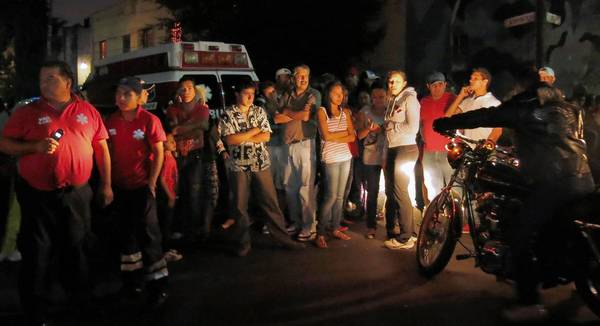
Photo: Residents and emergency workers gather at the scene of a shooting in Mexico City’s Tepito neighborhood. The mayor has deployed additional police to Tepito, home to 12 people who went missing from a bar in the capital in May. (Adriana Gomez Licon, Associated Press / June 6, 2013, via LA Times)

POPO AYER

“It’s the mouth of a volcano. Yes, mouth; and lava tongue. A body, a monstrous living body, both male and female. It emits, ejects. It is also an interior, an abyss.” — Susan Sontag.


H20

DSC_0584


Migrant shelter, Tapachula, Chiapas. [RF]

HOW-TO

guia image006 image003 image002 image004 image005

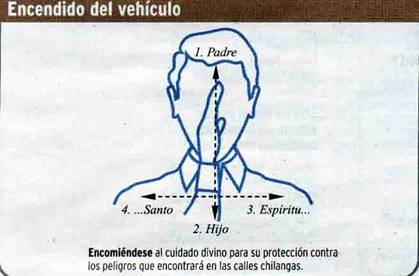
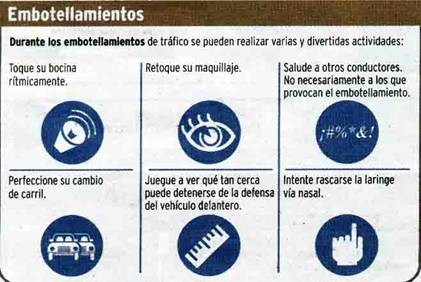
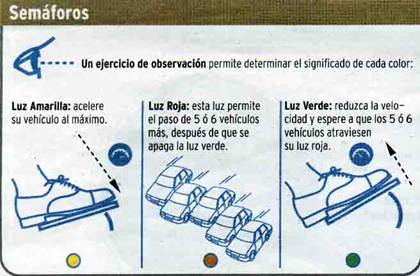
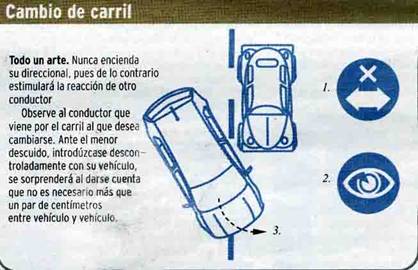
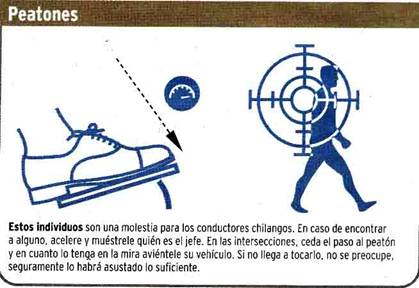
A  friend sent this “Mexico City Driving Manual” after reading my piece on the subject earlier this week. If you don’t read Spanish, you should still get an idea of the tenor of  this tongue-in-cheek guide from the illustration in the first panel, which suggests making the sign of the cross before cranking the ignition. The instructions become increasingly less holy from there.

LAUNDER NATION

la-fg-wn-mexico-kingpin-20130612-001


Originally posted at www.latimes.com:

Decades after a Mexican kingpin’s arrest, his fortune echoes

By Richard Fausset
June 12, 2013, 6:10 p.m.

MEXICO CITY  — Powerful Mexican drug boss Rafael Caro Quintero was off the streets in 1985, arrested in Costa Rica on suspicion of ordering a hit on a U.S. drug agent. His fate appeared to be sealed in 1989, when a Mexican judge convicted him and sentenced him to 40 years in prison.

It has been a long time since Caro’s halcyon days when, according to a Times article in 1992, he was the guest of honor at lavish parties, including one where he flamboyantly smoked cocaine while on the back of a dancing horse.

And apparently Caro’s influence lives on, according to the U.S. Treasury Department, particularly in the city of Guadalajara, Mexico’s second-largest metropolis. His dirty money is allegedly bankrolling construction and real estate projects, a luxury spa, restaurants, a shoe store, gas stations and a swimming pool company.

On Wednesday, the Treasury Department announced that 18 people — including Caro’s four children, wife and daughter-in-law — as well as 15 businesses linked to him had been “designated” under the Foreign Narcotics Kingpin Designation Act. The designation prohibits Americans from doing business with them and freezes any assets they may have in banks under U.S. jurisdiction.

It far from clear what kind of effect the designation will have: In 2011, The Times found that a number of Mexican businesses blacklisted by the U.S. remained in business.

But the alleged extent of Caro’s continuing influence offers a look at the way laundered narco fortunes — even those earned by kingpins locked away long ago — continue to make powerful waves in Mexico, bankrolling some of the most mundane commercial ventures.

It also demonstrates that U.S. law enforcement officials have long memories, particularly when it comes to cases in which one their own was slain. In this case, Enrique “Kiki” Camarena,  an undercover Drug Enforcement Administration agent, had been targeting Caro’s massive marijuana growing business. One operation resulted in the seizure of more than $50 million in marijuana. Camarena was eventually kidnapped, interrogated, tortured with burning cigarettes and killed.

The U.S. government launched a massive homicide investigation that resulted in a number of convictions of people involved in the plot, including the brother-in-law of former Mexican President Luis Echeverria. The story also generated hundreds of newspaper articles as various cases made their way through the Mexican and U.S. court systems.

Caro’s Guadalajara drug cartel, meanwhile, has long ceased to be the massive player it once was. But Gary Haff, the acting chief of the financial operations section for the DEA, made it clear in a statement Wednesday that his agency remembers.

“No amount of effort can clean [the drug dealers’] dirty money, paid for with their violence and by their victims, including DEA Special Agent Kiki Camarena,” he said. “DEA is committed to seeing that justice is done, and we will not rest until they and their global criminal networks have been put out of business, their assets have been seized, and their freedom has been taken from them.”

Guadalajara, capital of the southwestern state of Jalisco, has long been known as a city where narco bosses live, shop and send their children to school. The Treasury Department statement said  the designated businesses included a bath- and beauty-products store called El Baño de Maria, a restaurant called Barbaresco and a resort spa called Hacienda Las Limas.

On the travel website Tripadvisor, reviewers generally enjoyed their stay at Hacienda Las Limas. Their apparent ignorance of the alleged “dirty money” behind the place may come to be viewed as one of the defining conditions of the current Mexican era, a time when the stain of drug profits is difficult to detect and, at this point, probably impossible to erase:

“the service is beyond excellent. white terry cloth robes, huge beds, good sauna, hot tubs, small pool,” wrote a capitalization-averse guest named jeff p from Park City, Utah. “and unlike most spas you can have alcoholic drinks or smoke a cigar, or request a steak for dinner if you like.”

Copyright © 2013, Los Angeles Times

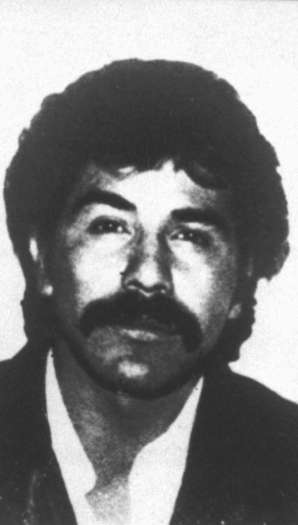
Photo: Rafael Caro Qunitero, in an undated photo supplied to the press many years ago by the Mexican government (via Los Angeles Times).


BIG TALK

Boasts dog Andres Granier, former governor of Mexico's Tabasco state

Originally published at www.latimes.com:

Former Mexican official’s boasts add fire to corruption probes

Andres Granier, ex-governor of Tabasco state, says he was drunk when he bragged that he had a luxury wardrobe of 300 suits and 400 pairs of shoes.

By Richard Fausset and Cecilia Sanchez, Los Angeles Times
June 12, 2013, 6:21 p.m.

MEXICO CITY — It was the kind of big-man boast that would have made Jay-Z or Bo Diddley proud: He owned 300 suits, he said. Four hundred pairs of pants, 1,000 shirts and 400 pairs of shoes. He shopped Beverly Hills, Rodeo Drive, “the best of Los Angeles.”

Unfortunately for Andres Granier, the ex-governor of the state of Tabasco, his fellow Mexicans are in no mood to hear such stuff from the political class.

Granier’s comments were surreptitiously recorded in October at a Mexico City party, and they have not helped his current predicament: State and federal prosecutors are pursuing criminal investigations of whether Granier and his team mishandled millions of dollars in state funds before leaving office in December.

The probes appear to be heating up. On Saturday, federal officials arrested Granier’s former state treasurer, Jose Saiz, at the U.S. border on suspicion of embezzlement. Earlier this month, a photo of Saiz with a red Ferrari surfaced. His attorney said Saiz bought the car with money he earned in the private sector.

On Wednesday, Granier — who has said his recorded boasts were untrue and made while drunk — was in Mexico City, where he planned to give a declaration to federal prosecutors behind closed doors. He asserted his innocence shortly after flying in from his home in Miami.

“I come to clear my name,” he told reporters at the airport. “I have no reason to run.”

Mexicans are watching the investigations of the former governor and his aides closely. Granier, 65, is a member of the Institutional Revolutionary Party, or PRI, which returned to the presidency in December after a 12-year hiatus, promising it would not indulge in the kind of old-school trickery and self-enrichment that marked its seven decades of quasi-authoritarian national rule.

After the government arrested flamboyant union boss Elba Esther Gordillo on corruption charges in February, President Enrique Peña Nieto went on national television and declared that in Mexico “no one is above the law.” Mexicans are waiting to see whether the government will follow through.

If, as many suspect, there are entrenched forces within the PRI who would rather hide the party’s sins, their task is complicated by media that, in the Mexican capital at least, are more feisty than in the old days. Social media users also keep the heat on, particularly through Twitter, where they have unleashed excoriating satire directed at those who appear to be indulging in the old soberbia, or arrogance.

The Peña Nieto government appeared to get the message last month when it fired the head of the federal consumer protection agency, Humberto Benitez Treviño. Benitez had been in the hot seat after his daughter apparently called out inspectors to close down a restaurant where she had been denied a good table. The episode had turned her into a kind of Public Enemy No. 1 on Twitter.

Federal prosecutors also launched an investigation, since turned over to state authorities, of a loan scandal that left the Coahuila state government with a $3-billion debt after the term of Gov. Humberto Moreira ended in 2011. He later served as national chairman of the PRI.

In April, the Mexico City newspaper Reforma reported that Moreira was living outside Barcelona, Spain, in a luxury home with a $4,500 monthly rent. Moreira said he was living off personal savings and a pension he earned as a teacher.

Granier’s Tabasco state is one of the nation’s poorest; according to federal figures, 57% of Tabascans were living in poverty in 2010. At a news conference last month, Granier’s successor, Arturo Nuñez, who represents a coalition of leftist parties, said the financial administration of the state under Granier had been “a labyrinth of trickery, missing documentation and a debt of over 20 billion pesos” — about $1.5 billion.

Granier may find a way to prove that he broke no laws. But his assertion that his drunken boasts were untrue will probably continue to be a hard sell in a country with a popular saying that goes: Los niños y los borrachos siempre dicen la verdad. Children and drunks always tell the truth.

“Andres Granier is coming back to Mexico?” went one common joke on Twitter on Tuesday night. “How many shirts and shoes will he have in his suitcase?”

richard.fausset@latimes.com

Sanchez is a news assistant in The Times’ Mexico City bureau.

Photo: Andres Granier, former governor of Mexico’s Tabasco state, arrives at the airport in Mexico City. He traveled from his home in Miami to meet with federal officials investigating the possible misuse of public funds during his term. (European Pressphoto Agency / June 13, 2013, via LA Times)

DRIVE

Learning to drive in Mexico City


Originally published at www.latimes.com:

Driver’s ed in Mexico City: White knuckles all the way

Mexico City doesn’t require adults to pass an exam for a driver’s license, but there are driving schools for ‘nervous people’ who are afraid of the wild roads.

STORY AND PHOTOS BY RICHARD FAUSSET

REPORTING FROM MEXICO CITY

June 12, 2013

Pedro Cervantes was speaking with his teaching voice. It was clear and almost mystically calm — the kind of voice you’d want talking you through the emergency landing of a passenger plane:

This is the steering wheel, he said. Hands at 10 and 2. This is your gas gauge.

Cervantes was in the passenger seat of a red, four-door Nissan compact from the Harvey Driving School, giving Patricia Sanchez, 52, her first lesson in how to drive.

Or, more specifically, how to drive in Mexico City, a seemingly infinite maze of daredevils and incompetents, of axle-bending potholes and curb-hugging taco stands, of signless seven-way intersections and baffling multidirectional traffic circles, of tamale vendors on tricycles and cops hungry for bribe money.

It’s a place with 4.5 million motorized vehicles, a place where someone is killed or injured in a traffic accident every hour, yet adults don’t have to take any sort of exam to receive a driver’s license.

But Sanchez, a retired social security agency worker, soft-spoken, with pink lipstick to match her nails, was looking for some peace of mind.

On the side of Cervantes’ Nissan, blocky yellow letters spelled out: “ESPECIALISTAS EN PERSONAS NERVIOSAS.” Specialists in nervous people.

This is the lever for the turn signal, he told Sanchez. This one works the wipers. Here are the pedals: El clutch, el freno, el acelerador.

“Sale?” he asked her. Got it?

“Mmm-hmmm,” she replied, unconvincingly.

“Muy bien.”

A car from Escuela de Manejo Harvey, or Harvey Driving School, advertises the company as “ESPECIALISTAS EN PERSONAS NERVIOSAS” (specialists in nervous people). 

In Mexico City, driver’s exams for adults were phased out in 2001 after widespread corruption was discovered among test administrators. These days, aspiring license-seekers can simply show up at a government office with an ID, proof of residence and 626 pesos, or about $50.

City officials recently announced that an exam of some kind will again be required for adult applicants next year. That should be good for business at the capital’s 29 licensed driving schools. For now, many of their customers are adolescents, who must show they took a driving course to qualify for a license. The rest are adults like Sanchez, the personas nerviosas.

She had paid 1,000 pesos, or about $80, for three two-hour lessons, consisting of a one-hour review of the controls, five hours of hands-on driving and a photocopied sheet of paper with basic, seemingly random tips: “Don’t look at airplanes,” “Don’t put your faith in good luck.”

Traffic laws were not part of the curriculum, Cervantes said. There simply wasn’t time.

Basically, it is “a course in how to survive,” the instructor said, laughing.

As the first hour came to an end, Sanchez still had a basic question. “So I put in the clutch when I hit the brakes?”

Minutes later, Cervantes was telling her to turn the key and urging her to let out the clutch slowly.

Derechito, derecheeeeto,” he said. Roughly translated as: Straight ahead. Nice and easy.

It’s unclear whether the return of the driving exam for adults will have any effect on Mexico City’s driving culture. What would be considered bad driving in other countries — the rule-bending, bumper-riding and lane-drifting — is simply business as usual here.

Locals turn to a specialized vocabulary to describe the most egregious scofflaws. A poor driver here is a cafre. To threaten to change lanes with wanton disregard for the cars around you — essentially, threatening them with an accident if they don’t move — is to echar lámina, or throw one’s metal around.

Pedro Hoth, Mexico City’s former international affairs coordinator, believes that Mexico City’s driving style is rooted in the age of conquest, when only the Spanish and their allies had the right to ride a horse. Having a horse meant having a special claim to power.

“Today the automobile is the substitute for the horse, but the attitude is the same,” Hoth wrote in a recent email. “It’s a kind of Jekyll and Hyde syndrome, this arrogance that many drivers experience once they get behind the wheel. The inside of the car becomes a space of arbitrary power.”

The plan to reintroduce the driving test is part of a broader, dawning sense that the problem has careened out of control. In the last few years, the city has undertaken a successful anti-drunk-driving initiative, setting up roadblocks called alcoholimetros.

An old photograph of cars entering a traffic circle on Mexico City’s main avenue, Paseo de la Reforma. (Jose Luis Magana / Associated Press, via Los Angeles Times)

After an out-of-control gas truck crashed and exploded May 7, killing 26 residents of suburban Ecatepec, newspaper columnist Sergio Sarmiento suggested that Mexicans, who are understandably fixated on the drug-cartel-fueled culture of violence in the country, should also focus on the culture of negligence. In 2011, more than 27,000 people died in violence in Mexico, government statistics show. That same year, more than 36,000 Mexicans died in various kinds of accidents — about 16,600 of them traffic accidents.

Patricia Sanchez’s plan had always been to leave the driving to someone else. For years, she commuted to work in a cab. Her apartment in the working-class neighborhood of Iztapalapa is just a couple of blocks from a Chedraui, Mexico’s homegrown big-box store. When she needed to venture farther afield, she took the subway or asked for rides from members of her large extended family.

But some of her chauffeur relatives have become busy of late, and Sanchez realized that she needed to learn how to drive. She was encouraged by the fact that she had successfully learned how to swim in her late 40s. Her daughter gave her the money for the driving lessons as a Mother’s Day present.

She liked Pedro Cervantes’ smooth, measured way of talking her through things. Her ex-husband had tried to teach her to drive years ago, she said, “but he always ended up yelling at me.”

Now she was rolling down one of Iztapalapa’s quieter streets, feeling out the interplay of clutch and gas while going about 5 mph.

Derechito, derecheeeeto,” Cervantes said. She stalled out on a speed bump with a violent jerk.

And so it went, Sanchez stalling her way around Iztapalapa. She stalled in front of taco stands and fruit vendors, in front of a group of schoolgirls in plaid skirts walking home. She stalled at a five-way intersection with no stop signs, giving her fellow drivers an unintentional sign that it was safe for them to go ahead of her. She stalled on her narrow, two-lane street, inexplicably scarred down the middle with a 6-inch-deep gash.

Cervantes helped her park the car. “Any doubts I can help you with?”

“I don’t think so,” she said.

Good, he told her. Tomorrow, the real test: the rest of the city.

The next day, she was so nervous she had a stomachache. She had read about the gas truck accident. (Prosecutors alleged the driver was a speeding cafre; the driver alleges he was forced to swerve to avoid a bus driver who was echando lámina, throwing metal.)

Driving instructor Pedro Cervantes teaches Patricia Sanchez, 52, the basics in Mexico City’s Ixtapalapa neighborhood.

Sanchez waited for Cervantes on the curb of her chewed-up street. He arrived on time and had her get behind the wheel. Soon they were off, shifting into higher gears, toward the imposing, anarchic, eight-lane arteries of Iztapalapa.

She was still struggling with the rhythm of the clutch, and it bothered her. But little else did.

The novelist David Foster Wallace once told a joke about a pair of fish who were asked how the water was today.

“What the hell is water?” one of the fish asked.

Sanchez has never lived anywhere but Mexico City. For the next two hours, the green peserominibuses would jockey within millimeters of her back bumper. A spiky-haired kid in wraparound sunglasses, in a lane to her right, would turn left in front of her at an intersection. Transfer trucks would roar on all sides. A man in a Ford Fusion would direct unprintable words her way as he raced past her passenger-side flank.

Junk-food delivery motorcycles whirred between lanes, bicyclists appeared suddenly from between taco-stand tarps. Everywhere, the city sidewalks would scream for her attention, advertising tire repair, insurance for sale, pastries, tailors, butchers and all of the homemade riches from the griddles of the street: tlacoyos, pambazos, sopes, huaraches.

Bone-rattling speed bumps arrived unannounced. The paint marking the lanes faded to black, reappeared and faded again.

Derechito,” Cervantes told her as she navigated calmly through it all. “Derecheeeto.”

Cecilia Sanchez and Karla Tenorio Zumárraga of The Times’ Mexico City bureau contributed to this report.

SERENATA

We had been driving around the back roads of Chiapas long enough to consider ourselves friends. At one point he parked the taxi in front of his little house in Tuxtla Chico and introduced me to his wife, who gave me God’s blessing. But now we were winding up into the mountains toward a place called Union Juarez, in search of a thing we would end up not finding.

He was happy. Happy that a gabacho was in his cab, one who was paying him well for his time, happy to be heading up to the mountains, closer to the cool, deep gray of the sky, away from the sick jungle heat of the flats.

We came to a lull in the conversation. Wires were hanging out of the cavity where his tape deck should have been. So he sang Jose Alfredo Jimenez:


Por tu amor, 
que tanto quiero, 
y tanto extraño 

Que me sirvan 
otra copa y muchas más 
que me sirvan 
de una vez 
pá todo el año 
que me pienso 
seriamente, emborrachar 

Si te cuentan 
que me vieron 
muy borracho, 
orgullosamente 
diles que es por ti, 
porque yo tendré 
el valor de no negarlo 
gritaré que por tu amor 
me estoy matando 
y sabrás 
que por tus besos 
me perdí 

Para de hoy en adelante 
ya el amor no me interesa 
cantare por todo el mundo, 
mi dolor 
y mi tristeza 

Porque se 
que de este 
golpe 
ya no voy a levantarme 
que yo no lo quisiera 
voy a morirme de amor 

MISERICORDIA

misericordia


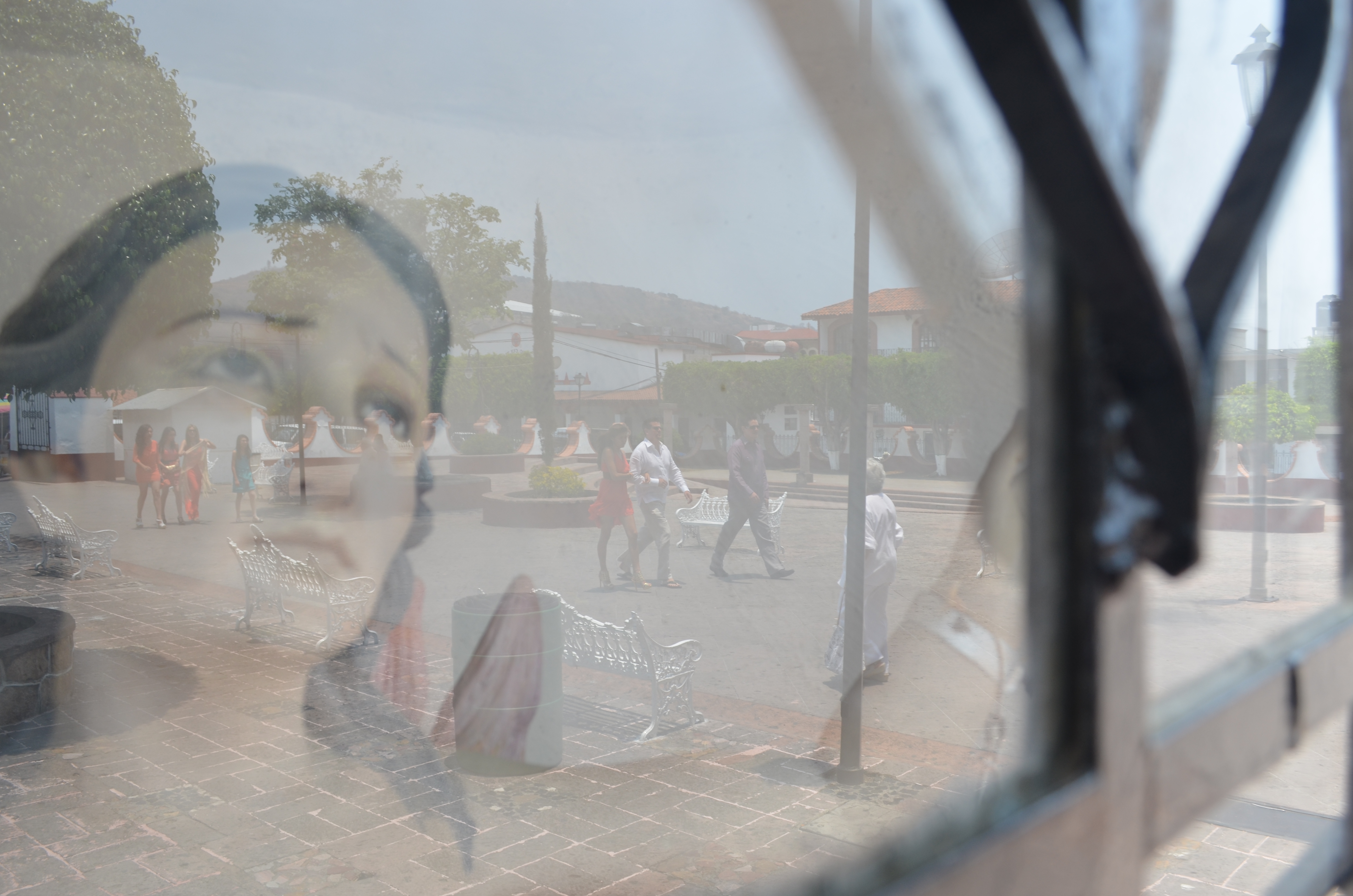
Town square, Tonatico, Estado de Mexico. [RF]